
About Us
YOLO Community
(Youth On the Land Opportunities)
Learn about the group of leaders across Canada who are supporting each other in their work to engage Indigenous youth in connecting to their lands, waters, communities, cultures, and themselves.
What is the YOLO Community?
The YOLO Community (Youth On the Land Opportunities) is a network of 200+ individuals supporting on-the-land/water opportunities for Indigenous youth across Canada. It includes folks running land-based learning programs through stewardship departments, Indigenous Guardian programs, health centres, schools, child/family services, non-profits, and more. Our goal is to come together and support each other in the important work we are doing to nurture the next generation of leaders in our communities. We do this by connecting with each other to share encouragement, information, resources, successes, challenges, and lessons learned.
We are stronger together, and we hope this website will lead to more support as programs and people learn from and share with one other.
The YOLO Community is currently coordinated by Nature United, a conservation organization that has been supporting Indigenous-led stewardship and youth on-the-land opportunities in partnership with Indigenous communities for many years. It is our deep aspiration that as the YOLO Community grows and more supporters come together, this network will transition to be held by Indigenous leadership, whether this be under the care of an existing organization/institution or a new/emerging one. If you have any questions or are interested in learning more about the YOLO Community and our vision, please contact us at youthontheland@gmail.com – we would love to be in conversation.
Connection Starts Here
YOLO Community Offerings
Virtual Coffee Hours
We run monthly Zoom coffee chats to build relationships and share information with each other in an open, welcoming, and informal setting. Many connections have already grown out of these coffee hours, with participants sharing tips and funding resources with each other, hiring one other to support their land-based programs, and talking about getting together for exchanges in the future. Check the Events and News page for upcoming opportunities.
Webinars
We offer monthly online presentations that include stories from different land-based programs, capacity building opportunities, information from organizations that can support our programs, and discussions on relevant topics that can make developing and growing on-the-land and on-the-water opportunities for Indigenous youth a little bit easier. Dates of upcoming webinars and links to recordings from past ones are posted in the Events and News section of this website.
Newsletter
We send out quarterly email newsletters with information on the latest news in the land-based learning space, including upcoming events, helpful tools and resources, relevant funding opportunities, job postings, and opportunities you can share with youth.
Resources
The YOLO Community website (which you are on right now!) provides several helpful resources for those supporting Indigenous youth. Here, you will find the latest
- Funding opportunities
- Stories of what other communities are doing to support youth
- Events and opportunities to connect to the YOLO Community
- Templates that may make your work a little easier
This YOLO Community (Youth on the Land Opportunities) website has been designed in partnership with an advisory group made up of 10 Indigenous and non-Indigenous leaders from organizations and Nations across BC, NWT, and MB who are championing on-the-land programming or supporting Indigenous youth in their respective spaces.
Advisory group members responded to a callout in a 2023 YOLO Community newsletter and met six times over the course of a year to help shape the content and design of this website so that it could be as useful as possible for others developing and growing their own land-based learning programs. Each person brought something unique to the group based on their specific personal and professional experiences. Please read through the advisory group members’ bios below to learn more about them.
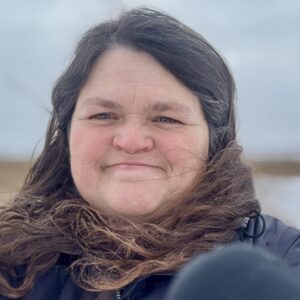
Cheryl Antonio
Advisor
The Pas, MC
Biography
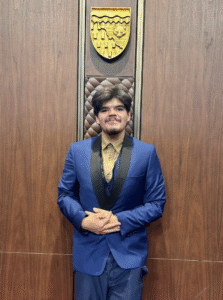
Gabriel Brost
Advisor
Yellowknife, NWT
Biography
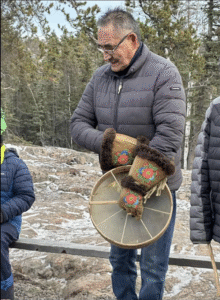
Wilbert Menacho
Elder
Tulita, NWT
Biography
My name is Wilbert Menacho, and I am Dene from Tulita, NWT. I am a residential school survivor, and as such, I recognize that this experience took me away from my culture. The Dene are a strong and gifted people, with deep connections to the land. I love to work with youth and bring them to the land. I strongly believe our youth can learn so much from the land. Our elders have always taught the importance of guiding youth on the land, and safety is always number one. The land is healing, it speaks to you. Take a moment to sit, look around, and appreciate what surrounds you. Watch the rivers, honour our ancestors who paddled these waters, and notice the beauty and usefulness of the land. I am thankful to organizations that take youth out on the land to show them traditional ways of life. My message to youth: respect the places you travel, care for each other and your instructors, work hard, relax in the evenings, do your best, and most importantly, be safe on the land.
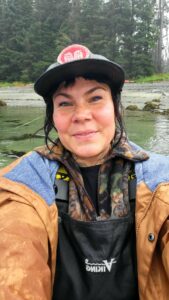
Sandlanee Gid Raven Ann Potschka
Haida Gwaii
Biography
Sandlanee Gid Raven Ann Potschka is from the Gawa Git’ans, Massett Inlet Eagle Clan, Haida Gwaii. She’s a proud mom of twins and has spent over 25 years supporting youth, families, and communities through land-based learning and Indigenous wellness. Reconnecting with her Haida roots helped her heal from childhood and intergenerational trauma, and she now shares that journey to help others do the same. Guided by Elders and grounded in Yahguudang (respect), she weaves together culture, ceremony, and mental health work to create spaces for healing, belonging, and connection to the land.
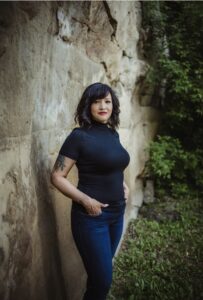
Lindsay Yasinski
PhD Student
University of British Columbia
Vancouver, BC
Biography
Tansi, my name is Lindsay Yasinski, and I am Nêhiyaw (Cree), Red River Métis, and of Eastern European descent. I was born and raised in my ancestral territory in Peace River, Alberta, where I acknowledge the Cree, Dene, Beaver, and Métis peoples. I have maternal kinship ties to the Lubicon Lake First Nation and Woodland Cree First Nation, both located in Treaty 8 territory. I am a proud member of the Métis Nation of Alberta, and am directly descended from the Lambert, Lizotte, Flett and Bird families of the Red River Métis. I have worked in the Canadian education system for 12 years as a teacher, educational assistant and Indigenous Support Worker. I completed a Bachelor of Education from the University of Calgary, and a Master of Education in Indigenous Education from the University of Columbia. Currently, I am in my first year of a PhD in Educational Studies at UBC. I teach urban Indigenous youth and am passionate about creating an educational space where they can safely explore their identities. My research focuses on how urban Indigenous youth connect with their Indigenous identities within a school setting. The work of Indigenous education is woven into my heart and my being. As an educator and researcher, my goal is to improve the Canadian education system and break down barriers for Indigenous students. I carry the teachings of my Nêhiyaw and Métis ancestors with me, as a mother, educator, student, and leader, grounded in love, care, and the kinship responsibilities that shape how I move through the world. I approach this important work with authenticity, humility, and love for my colleagues, teachers, and students.
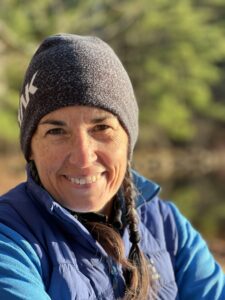
Liz Halina
Consultant, Instructional Design & Indigenous Education
Gatineau, QC
Biography
Liz Halina, a member of Sagkeeng First Nation, currently based in Gatineau, Quebec, has 15 years of classroom experience and an additional 10 years working directly with educators to enrich curricula with Indigenous perspectives. She is deeply committed to advancing Indigenous Land-Based Education and supporting teachers in creating inclusive, culturally responsive learning environments.
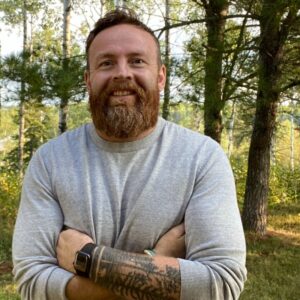
Shea Henderson
YOLO Community Network Coordinator
YOLO Community
Churchill, MB
Biography
My name is Shea Henderson and I am an educator, program designer, and community collaborator with nearly 15 years of experience working across Northern and remote regions in Ontario and Manitoba. Originally from Lion’s Head, a small community in Southern Ontario, I now live on Treaty 5 territory in Churchill, MB, and work with communities across the province situated on Treaties 1, 2, 3, 4, 5, 6, and 10. Growing up surrounded by nature, I developed a deep respect for the environment and an early understanding of how land and experience shapes identity, well-being, and growth.
My work spans formal education, community development, and land-based programming. I’ve had the privilege of supporting learners across diverse settings, from classroom teaching and community-engaged learning to co-developing culturally grounded programs and leading experiential education initiatives. Collaborating with teachers, youth, Elders, and Knowledge Keepers, I focus on co-creating learning experiences rooted in respect, relevance, reciprocity, responsibility, and relationality.
What grounds my practice is a commitment to learning that is immersive, reciprocal, and guided by lived experience. I believe deeply in the power of education that moves beyond the walls of a classroom – education that is felt, witnessed, and lived. Lead with experience. Lead with good relationships. Lead with immersion. When we do this, the learning becomes transformative – for students, for educators, and for the communities we serve.
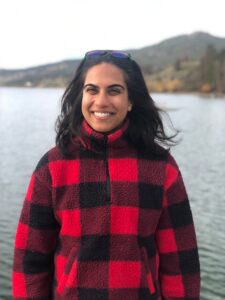
Zahra Remtulla
Indigenous Youth On-the-Land Support Lead
Nature United
Vancouver, BC
Biography
Zahra lives on xʷməθkʷəy̓əm (Musqueam), Sḵwx̱wú7mesh (Squamish), and səlilwətaɬ (Tsleil-Waututh) territory (Vancouver, BC) and started at Nature United in 2018. She supports Indigenous communities across Canada in running strong and resilient on-the-land/water programs for Indigenous youth, who will be the future stewards of their communities, cultures and territories. This work involves facilitation support, developing tools and resources, and facilitating webinars to support networking between partners. Zahra is currently supporting the YOLO Community in a coordinating role and is excited about how the governance structure of the YOLO Community may evolve – she hopes to one day see this work led by an Indigenous institution and directed by a robust advisory group. Before working for Nature United, Zahra worked in Indigenous education with Vancouver Island University in Snuneymuxw territory (Nanaimo, BC) and in public health in Vancouver’s Downtown Eastside. She is a K-12 teacher by training and currently studying to become a Registered Clinical Counsellor.
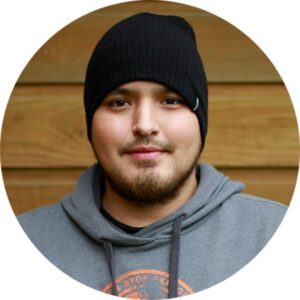
Vern Brown
Outdoor Coordinaor
Kitasoo/Xai'xais Resource Stewardship
Klemtu, BC
Biography
Vern Brown is Kitasoo/Xai’xais and has been the Supporting Emerging Aboriginal Stewards (SEAS) Summer Internship Coordinator for the community since 2016. Vern’s top goals as Coordinator are to expose his interns to as much of their territory as possible, inspire curiosity and show them that they have opportunities once they finish school. “Youth in our community represent the future stewards of our territory,” Vern says. “It is our Nation’s vision to reconnect young people to the Earth and their culture. To teach them where they come from and who they can be.”
Vern also does lots of work with the Kitasoo/Xai’xais Resource Stewardship Department, including creek walking, forestry work, and other monitoring and science work. He has expertise in bear research, mapping, drones, and much more!
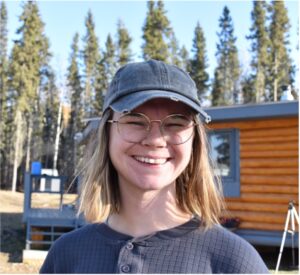
Steph Woodworth
Project Director
Northern Youth Leadership
Yellowknife, NT
Biography
Steph Woodworth (they/them) is a PhD Candidate in the Department of Geography, Environment and Geomatics at the University of Ottawa, co-supervised by Dr. Sonia Wesche and Dr. Andrew Spring, and is the Project Director at Northern Youth Leadership. For their doctoral research, Steph explored on-the-land camps in the Northwest Territories, which educate and engage northern youth. Specifically, they used photovoice during on-the-land camps with northern youth to capture their experiences of land-based education and their concerns of, and priorities for, changes happening in their communities. As Project Director for Northern Youth Leadership, their vision is to empower and inspire a generation of courageous, young Northern leaders. Northern Youth Leadership programming has two main components (1) on-the-land camps for northern youth (ages 11-17) and (2) a leadership development program, an employment mentorship program for youth aged 14-25. In their PhD research and role as Project Director, Steph works to foster opportunities for youth to connect with the Land, build self-confidence, improve mental health and wellbeing, participate in safe spaces, and strengthen peer networks. Overall, Steph is deeply passionate about empowering and educating youth to be land-based leaders.
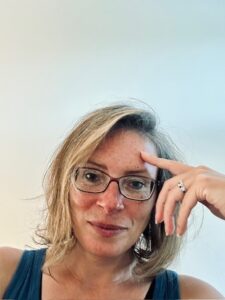
Heather Burke
Manager, Indigenous Initiatives
Vancouver Island University
Nanaimo, BC
Biography
Heather Burke, BA, MA is Métis with ancestral ties to the former Red River Settlement, a historical Métis community. She has Indigenous and European ancestry on her father’s side and English and American ancestry on her mother’s side. Heather is a Learning Facilitator in the Office of Indigenous Education and Engagement at VIU in partnership with the EleV program. Heather works to centre and amplify Indigenous voice by sharing the promising practices and teachings we have received from Indigenous learners, communities, families, the VIU community, and other learning partners as a way to be accountable to these groups and honour the responsibility to be transparent and authentic in our work together.
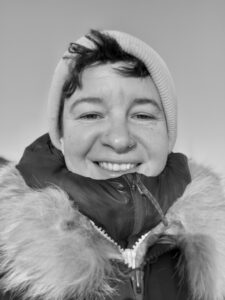
Wren Nicolardi
Director/Co-founder
Rivers to Ridges
Whitehorse, YK
Biography
As an education leader, curriculum designer and project manager Wren can be found on the land with young people and project partners, as well as in classrooms and boardrooms. Wren was raised between the Niagara Escarpment and the shores of Lake Ontario on the traditional territories of the Haudenosaunee Anishinabewaki ᐊᓂᔑᓈᐯᐗᑭ, Attiwonderonk, Mississauga, and Mississauga of the New Credit, and they have over 15 years experience working with children, youth, families and community partners on the land and behind the scenes in education design and delivery. Wren has always felt called to work outdoors with young people. Rivers to Ridges was born out of a desire to create space for young people to feel curious about and connected to the land around them. Wren uses their BEd and organizational leadership experiences to increase access to land-based learning for young people, and to decolonize educational systems through learning design. Wren feels most alive when working in relationship with youth as they develop their sense of self in connection to place/land; working with inspiring teams to create meaningful learning experiences; learning from local land stewards; supporting young people in taking risks; and celebrating bird language and song as a doorway to deeper awareness.

Growing the YOLO Community Advisory Group
To date, the YOLO Community Advisory Group has been focused primarily on establishing this website. As our network continues to grow, we would like to expand the scope and role of the YOLO Community Advisory Group. We envision a future where a robust governance structure is in place that allows the YOLO Community Advisory Group to guide the direction of the YOLO Community more broadly, as we work together to advance support for Indigenous youth on-the-land and on-the-water opportunities across the country. To support this effort, we will be looking for new members from all regions of the country to join the YOLO Community Advisory Group. If you are interested in being part of this work, please reach out to us at youthontheland@gmail.com. We would love to discuss with you!